

Mastering Email Marketing- A Beginner’s Guide

Email marketing is essential for companies of all sizes in the modern world. It increases engagement and revenue by enabling businesses to communicate directly with their audience. For beginners, a solid marketing strategy requires an understanding of the fundamentals of email marketing.
You will gain a comprehensive understanding of email marketing from this beginner’s tutorial. We’ll discuss the significance of it, the most effective methods, and how to make it work. You’ll be able to launch an effective email marketing campaign by the end.
Key Takeaways
- Recognizing the significance of email marketing in the current digital environment.
- Understanding the fundamentals of email marketing and how it fits into a marketing plan.
- Finding the finest methods for developing successful email marketing campaigns
- Investigating methods for assessing and improving the effectiveness of email marketing
- Creating a comprehensive strategy for employing email marketing techniques
What is Email Marketing and Why It Matters
One important tool in digital marketing is email marketing. It facilitates audience engagement, relationship-building, and revenue growth for enterprises. It is essential to comprehend its definition and fundamental ideas.
Definition and Core Concepts
Customers or prospects receive tailored emails from email marketing. To achieve marketing objectives, it entails writing and distributing various kinds of emails.
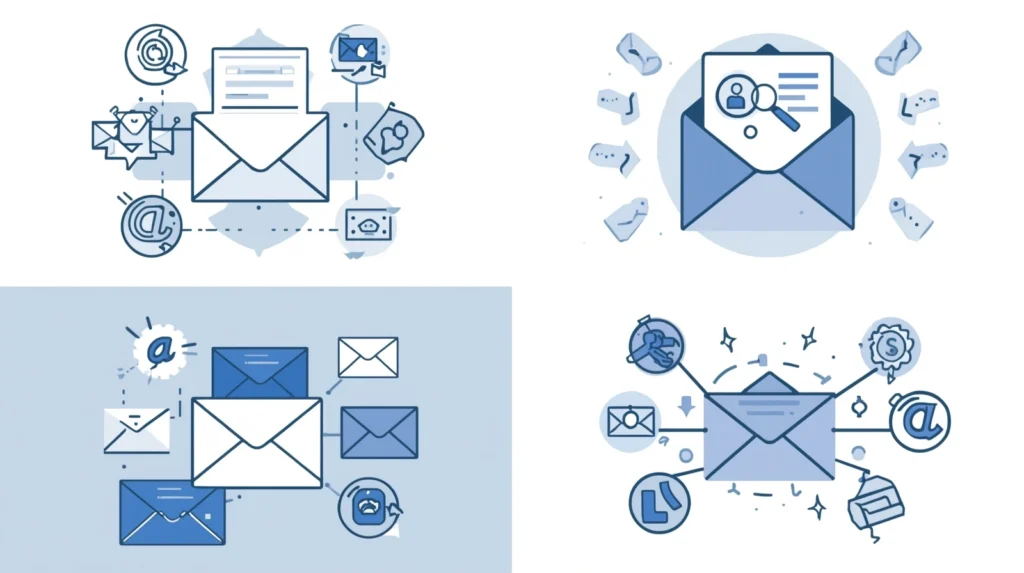
Types of Marketing Emails
- Newsletters: Consistent information on the business, its goods, or services.
- Promotional emails: Emails intended to advertise certain deals, discounts, or goods are known as promotional emails.
- Transactional emails: Transactional emails are automated messages that are sent in response to particular activities, such purchase confirmations.
- Abandoned cart emails: Emails concerning things left in a customer’s shopping cart are known as abandoned cart reminders.
The Marketing Funnel and Email’s Role
The customer’s path from awareness to conversion is depicted in the marketing funnel. At every level, email marketing is essential. It increases sales at the bottom while educating at the top.
Benefits of Email Marketing for Businesses
Email marketing helps establish direct consumer interactions and offers a high return on investment.
ROI Comparison with Other Channels
In terms of ROI, email marketing frequently outperforms other mediums. For every $1 spent, the DMA boasts an average return on investment of $42.
Direct Communication and Relationship Building
Businesses may communicate with their audience directly through email marketing. This fosters loyalty and trust. Customer interactions are strengthened by personalized content.
Key Statistics That Demonstrate Effectiveness
- 80% of companies claim that email marketing improves client retention.
- The median ROI for email marketing is 122%, whereas the ROI for banner advertisements is 2.4%.
Setting Up Your Email Marketing Foundation
The secret to success in email marketing is a strong foundation. It entails a number of crucial procedures. These procedures aid in the secure delivery of your emails to recipients.
Choosing the Right Email Service Provider
Selecting the appropriate Email Service Provider (ESP) is essential. You manage your email list, set up campaigns, and monitor outcomes in your ESP.
Popular ESP Options for Beginners
- Mailchimp
- Constant Contact
- Sendinblue
- ConvertKit
Features to Prioritize
Look for these characteristics while choosing an ESP :
- Usability
- Capabilities for automation
- Connectivity to additional tools
- Customer service
- Scalability
Creating Your Sender Identity
People see you based on your sender identity. Your email address and name are included. Make sure it is consistent and has a professional appearance.
lets you know who may send emails on your behalf.
Setting Up Authentication (SPF, DKIM, DMARC)
To keep your emails from being marked as spam, set up authentication:
- SPF (Sender Policy Framework): lets you know who may send emails on your behalf.
- DKIM (DomainKeys Identified Mail): uses a digital signature to confirm the legitimacy of your emails.
- DMARC (Domain-based Message Authentication, Reporting, and Conformance): handles unsuccessful SPF or DKIM checks to prevent email spoofing.
Building Your Email List from Scratch
The foundation of every successful email marketing strategy is a well constructed email list. It takes considerable preparation, the appropriate tools, and a thorough understanding of your audience to create one from start.
Creating Effective Sign-up Forms
Creating functional sign-up forms is the first step in creating an email list. Visitors to your website should find these forms appealing and simple to see.
Placement and Design Best Practices
Place sign-up forms in prominent areas of your website, such as the blog posts and homepage. To increase sign-ups, use simple language and contrasting colors.
Information to Collect vs. Conversion Rate
When creating your list, avoid requesting too much information. Start with simply your email address and name. People may join up more easily as a result.
Lead Magnet Strategies That Convert
Lead magnets are a unique way to obtain email addresses. Exclusive material, seminars, and eBooks are all effective lead magnets. As
“The secret is to provide value that appeals to your target market.”
Ethical List Building Practices
For your list to be healthy, you must build it in an ethical manner. This entails abiding by permission-based marketing guidelines.
Permission-Based Marketing Principles
Always get permission from people before sending them an email. This is in line with laws like GDPR and makes sure that people want to get your emails.
Avoiding Purchased Lists
Don’t buy email lists because they are often out of date or not useful. This can hurt your reputation and get you in trouble with the law. Instead, use good sign-up forms and lead magnets to grow your list naturally.
Complete Guide to Email Marketing for Beginners
If you want to start email marketing, you need to learn the basics and use the right tools. It’s not enough to just send emails. It’s about making a strong connection with your audience through email.
Understanding the Email Marketing Ecosystem
Email marketing is a multifaceted field. These include platforms for tracking outcomes, content creation tools, and email service providers. The secret to successful email marketing is understanding how these components interact.
Essential Tools and Resources
Beginners need to know about the main tools and resources for email marketing. These include:
Email Templates and Design Tools
Email templates are a good place to start making attractive emails. Design tools, like drag-and-drop editors, make it easy for anyone to create nice-looking emails, even if they’re not designers.
Content Creation Resources
Good content is the heart of email marketing. Tools like content calendars, writing guides, and subject line testers help make your emails better.
| Tool Category | Examples | Benefits |
|---|---|---|
| Email Service Providers | Mailchimp, Constant Contact | Manage email lists, create campaigns, track analytics |
| Email Templates | Templates by Mailchimp, Stripo | Professional designs, easy customization |
| Content Creation | Grammarly, Hemingway Editor | Improve writing clarity, readability |
Setting Realistic Goals and Expectations
It’s important to set goals you can reach in email marketing. You need to know what’s normal for your industry and when you’ll see results.
Benchmarks for Your Industry
Every industry has its own email marketing standards. Knowing these helps you set goals that are realistic.
Timeline for Seeing Results
Email marketing takes time. It usually takes a few months to see big changes from your efforts.
Crafting Compelling Email Content
Effective email marketing starts with content that speaks to your subscribers. It’s about knowing your audience, being clear, and using the right tone. This combination drives engagement.
Writing Subject Lines That Get Opened
The subject line is the first thing your subscribers see. It’s key to getting your email opened. Understanding the psychology behind effective subject lines boosts your open rates.
Psychology Behind Effective Subject Lines
Good subject lines spark curiosity or create urgency. Emotions play a big role in making them compelling.
A/B Testing Subject Line Approaches
Testing different subject lines helps you find what works. Try varying lengths, tones, or emojis to see what your audience prefers.
Email Body Structure and Best Practices
The email body’s structure is as important as the subject line. Storytelling in email marketing makes your content memorable and engaging.
Storytelling in Email Marketing
Using stories in emails creates an emotional bond with your audience. It’s about sharing your brand’s story in a way that resonates.
Length and Formatting Considerations
The length and formatting of your email matter for readability. Short paragraphs and proper formatting improve the reader’s experience.
Call-to-Action Optimization
A well-crafted call-to-action (CTA) is key for conversions. Understanding call-to-action optimization can greatly impact your campaign’s success.
Single vs. Multiple CTAs
Choosing between a single or multiple CTAs depends on your email’s purpose and audience. Testing both can show you what works best.
Button Design and Placement
The design and placement of your CTA button are critical. Make sure it stands out and is easy to find to boost click-through rates.
Email Design Principles for Non-Designers
Creating effective emails doesn’t need a lot of design knowledge. Just a few key principles are enough. It’s important to think about how emails look on different devices and in various email clients.
Mobile-Responsive Design Essentials
Most emails are opened on mobile devices. So, making sure your emails work well on mobile is key. Use flexible grids, images that resize, and media queries to adjust the layout for different screen sizes.
Visual Hierarchy and Layout Basics
A good visual hierarchy helps guide the reader’s eye through the email. Use headings, subheadings, and clear calls-to-action (CTAs) to lead the reader.
“The most important thing in communication is hearing what isn’t said.” – Peter Drucker
Using Templates Effectively
Email templates can save time and keep your campaigns looking consistent. When using templates, think about:
- Customizing without coding
- Keeping your brand consistent in all emails
Customization Without Coding
Many email services have drag-and-drop editors. These let you change templates without coding.
Brand Consistency Across Emails
Make sure your emails match your brand. Use the same colors, fonts, and images in all your emails.
| Design Element | Description | Best Practice |
|---|---|---|
| Color Scheme | Choose colors that reflect your brand | Use 2-3 core colors |
| Typography | Select fonts that are clear and readable | Stick to 1-2 font families |
| Imagery | Use images that support your message | Optimize images for fast loading |
Email Marketing Automation Fundamentals
Email marketing automation makes customer experiences more personal. It automates routine tasks, letting businesses create better content. This improves how they connect with customers.
Setting Up Welcome Sequences
Welcome sequences are key for a strong first impression. They introduce new subscribers to your brand and set the tone for future interactions.
First Impression Email Structure
A good first impression email should be warm and welcoming. It should introduce your brand and have a clear call-to-action (CTA). You might offer a discount or a free resource to get people engaged.
Onboarding Sequence Planning
Planning an onboarding sequence means mapping out the customer journey. You identify key touchpoints to make sure your emails are timely and valuable.
Designing Customer Journey Flows
Customer journey flows guide subscribers through emails based on their actions. This could be nurturing leads or encouraging repeat purchases.
| Customer Action | Email Trigger | Goal |
|---|---|---|
| Signs up for newsletter | Welcome email | Introduce brand |
| Abandons cart | Abandoned cart email | Recover sale |
| Completes purchase | Thank you email | Build loyalty |
Behavioral Triggers and Personalization
Behavioral triggers are actions that trigger specific emails. Personalization makes these emails fit the individual’s preferences and behaviors.
Abandoned Cart Emails
Abandoned cart emails are sent to customers who left items in their cart. These emails can help recover lost sales.
Re-engagement Campaigns
Re-engagement campaigns target inactive subscribers. By sending targeted emails, businesses can spark interest and get subscribers to re-engage.
Segmentation and Personalization Strategies
Segmentation and personalization are key to making email campaigns powerful. By knowing what their audience wants, marketers can send messages that really hit home.
Segmenting Your Audience Effectively
Segmenting your audience well is key to email marketing success. It means dividing your list into groups based on certain criteria.
Demographic vs. Behavioral Segmentation
Demographic segmentation looks at things like age and location. Behavioral segmentation looks at what people do, like buying habits. Using both gives a deeper understanding of your audience.
Creating Targeted Segments
To make targeted segments, analyze your data for patterns. For example, you can send reminder emails to those who left items in their cart.
| Segmentation Criteria | Description | Example |
|---|---|---|
| Demographic | Age, Gender, Location | Targeting women aged 25-45 |
| Behavioral | Purchase History, Email Engagement | Sending offers to frequent buyers |
Personalization Beyond First Name
Personalization is more than just using someone’s first name. It’s about making content that matches their interests. With dynamic content, emails can change to fit what each person likes.
Dynamic Content Implementation
To use dynamic content, you need a good email service provider. This lets you create emails that change based on who’s reading them. For example, a store can show different products based on what you’ve looked at.
A/B Testing and Optimization
Email marketing optimization through A/B testing is key to better campaign results. By testing different parts of an email, marketers learn what their audience likes. This helps improve how well emails perform.
What Elements to Test First
Choosing the right elements to test first is important. These elements have a big impact on how well a campaign does. They include:
- Subject lines: Changing subject lines can really boost open rates.
- Email content: Trying out different content, like images or text, can affect how people engage.
- Call-to-action (CTA) buttons: Different CTAs can change how many people click through.
Setting Up Valid Tests
To make sure A/B tests are valid, marketers need to think about a few things:
Sample Size Considerations
A big enough sample size is key for reliable results. A bigger sample size means less chance of error and more confidence in the results.
Controlling Variables
It’s important to test one thing at a time. Testing too many things at once can make results hard to understand.
Implementing Test Results
After getting the test results, the next step is to use what you learned. This means:
- Looking at the results to see which version worked best.
- Using that knowledge to make future emails better.
- Keeping up with testing and improving email marketing based on data.
By using a methodical approach to A/B testing and optimization, email marketers can really improve their campaigns. This helps them reach their marketing goals more effectively.
Measuring Success: Analytics and KPIs
To see how well email marketing works, businesses need to look at analytics and KPIs. Knowing these metrics helps check if campaigns are doing well. It also guides future marketing plans.
Essential Email Marketing Metrics
Email marketing metrics show how people interact with emails. Key metrics include:
Open Rate, Click Rate, and Conversion Rate
- Open Rate: The percentage of recipients who open the email.
- Click Rate: The percentage of recipients who click on a link in the email.
- Conversion Rate: The percentage of recipients who do what you want them to.
These metrics are key to seeing if email campaigns are working well.
Deliverability and List Health Metrics
Metrics like bounce rates and spam complaints are important for a healthy email list. A high bounce rate or lots of spam complaints can hurt your reputation.
| Metric | Description | Importance |
|---|---|---|
| Bounce Rate | Percentage of emails that can’t be delivered. | High bounce rates can harm your reputation. |
| Spam Complaints | Number of people who mark emails as spam. | Affects how well emails get delivered and your score. |
Setting Up Tracking and Reporting
To really measure email marketing success, you need to set up good tracking and reporting. Use email service providers (ESPs) that give you detailed analytics and reporting tools.
Using Data to Improve Campaigns
Identifying Patterns and Trends
Looking at campaign data helps spot patterns and trends in how people behave. This info can help make future campaigns better, leading to more engagement and sales.
“The key is not to prioritize what’s on your calendar, but to align your tasks with your goals.” – Unknown
Making Data-Driven Decisions
Using data analytics lets marketers make smart choices instead of just guessing. This way, email marketing plans are more likely to succeed.
Common Email Marketing Mistakes to Avoid
Email marketing can fail if marketers don’t know the common mistakes. It’s important to avoid these to keep your audience engaged and interested.
Frequency and Timing Errors
Sending too many emails can make people tired and lose interest. On the other hand, sending too few emails can make your brand forgotten. Finding the right balance is key.
Content and Design Pitfalls
Badly designed emails or irrelevant content can lower engagement. Personalization and relevance are key to grab attention.
Technical and Compliance Issues
Technical problems, like authentication issues, can stop emails from being delivered. Following rules like GDPR is also important.
Spam Triggers to Avoid
Some words and phrases can make emails land in spam folders. It’s important to avoid these to reach your audience.
Deliverability Red Flags
Poor list hygiene and lack of authentication can harm deliverability. Keeping your email list clean and using authentication can help.
| Common Mistake | Impact | Solution |
|---|---|---|
| Over-sending emails | Subscriber fatigue | Balance sending frequency |
| Poor email design | Low engagement | Improve design and personalization |
| Lack of authentication | Deliverability issues | Implement SPF, DKIM, DMARC |
Conclusion: Your Email Marketing Roadmap
Mastering email marketing needs a solid plan. This guide has given you a great start. You now know the basics, how to set up, and how to make your content stand out.
For a successful email marketing plan, keep learning and improving. You’ve learned how to build a good email list, segment your audience, and make your messages personal. Always check your email marketing numbers and tweak your plans to meet your goals.
By using the tips from this guide, you’re on the path to a strong email marketing strategy. Focus on giving value to your subscribers. Keep working to make your strategy better and increase your return on investment.
FAQ
What is the best email service provider for beginners?
For beginners, Mailchimp, Constant Contact, and Sendinblue are great. They have easy-to-use interfaces and many features to help you start with email marketing.
How do I create an effective sign-up form?
To make a good sign-up form, think about where and how it looks. Use a clear headline, keep fields simple, and make sure it works on phones.
What is a lead magnet, and how can I use it to build my email list?
A lead magnet is something valuable you offer for an email address. It could be an eBook, webinar, or discount. Use it to get people to join your email list.
How often should I send emails to my subscribers?
How often you send emails depends on your audience and what you’re sending. Try different times to see what works best. Be careful not to send too often.
What are some common email marketing mistakes to avoid?
Avoid sending too many emails, and make sure your content and design are good. Also, watch out for spam triggers and technical issues.
How do I measure the success of my email marketing campaigns?
Track important metrics like open rate and click rate. Use this data to see what works and make better emails.
What is A/B testing, and how can I use it to improve my email marketing?
A/B testing compares two emails to see which one does better. Try it with subject lines, email body, and calls-to-action. Use the results to make your emails better.
How can I ensure my emails are delivered to my subscribers’ inboxes?
Use authentication like SPF, DKIM, and DMARC. Avoid spam triggers and keep your list clean. Only send emails to people who have agreed to receive them.
What is segmentation, and how can I use it to personalize my email content?
Segmentation groups your list by demographics or behavior. Use it to make your emails more personal and engaging.
How can I optimize my email content for mobile devices?
Make your emails mobile-friendly by using responsive design and clear calls-to-action. Keep your content short and easy to read on small screens.


Ahaa, its pleasant discussion about this article at this place at this website, I have read all that, so now me also commenting here.
Thank you. I’m glad to know you enjoyed the discussion.